


Your Reliable Partner for Intermodal Transport Solutions
At Samskip, we have the proven experience and expertise to find the best intermodal transport solutions for our customers. Our integrated network allows us to scale capacity and remain flexible, ensuring that we meet every customer requirement with precision and reliability.
So, discover how our intermodal solutions can transform your logistics and start partnering with us today for more efficient and cleaner transport.

What is Intermodal Transport?
Intermodal transport is a subcategory of multimodal transport that combines different modes, such as rail and road. This happens while keeping your cargo in the same loading unit, typically a container, throughout the entire journey. By using this approach, we are minimizing handling time, ensuring efficiency and flexibility from start to finish.
Advantages
Intermodal transport offers a smart and sustainable way to move goods across Europe. Some key advantages are:
- Sustainability: It significantly reduces CO₂ emissions compared to road-only transport.
- Reliability: It minimizes the risk of damage thanks to fewer cargo handlings throughout the journey.
- Flexibility: It ensures seamless integration across multiple transport networks for smooth operations.
- Key Intermodal Hubs: Intermodal transport is most predominant in key European countries such as Italy, Germany, and the Netherlands, where rail systems are well-developed.

What is The Difference Between Intermodal and Multimodal Transport?
The difference lies in how your cargo is handled. Multimodal transport combines different modes under a single contract and responsibility. Unlike intermodal, cargo may be transferred between different loading units during the journey, offering more routing options and adaptability. Intermodal keeps goods in the same container throughout the journey, reducing handling and risk. It also typically involves multiple contracts, and each shipper coordinates each part of the journey separately. To keep it short, all intermodal transport is multimodal, but not all multimodal transport is intermodal. Both approaches aim to deliver efficiency, sustainability, and reliability, tailored to your logistics needs.

So, why do we primarily use multimodal transport across our network? This is because it offers greater efficiency and flexibility for our customers’ diverse cargo needs. Our multimodal network also includes short-sea shipping. Additionally, by leveraging our strategic position at Matrans Rotterdam Terminal, we can optimize routes and reduce transit times. However, in certain regions, such as Italy, Germany, and parts of Eastern Europe, we also provide intermodal logistics solutions. For more information on multimodal transport, click here.

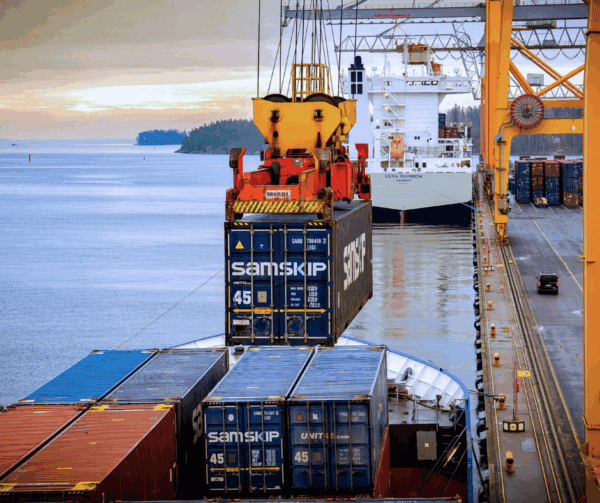
Types of Intermodal Transport
Whether your goods move within the country or across borders, our intermodal solutions deliver reliability and sustainability.
1. Domestic Intermodal
Domestic intermodal solutions move goods within a single country, combining modes like rail and road for efficient inland transport.
Example: A retailer ships goods from one city to another using a combination of truck and rail. The cargo stays in the same container throughout the journey, reducing handling time and minimizing delays.
2. International Intermodal
International intermodal connects global supply chains by combining ocean, rail, and road transport across borders. By using this, customers can simplify their processes and lower their environmental impact.
Example: Electronics manufactured overseas are shipped by sea, then transported inland by rail and delivered to the final destination by truck.
Modal Combinations in Intermodal Transport
We combine multiple transport modes to deliver efficient, sustainable, and cost-effective logistics. Choosing the right combination of transportation modes is important. So, depending on distance, infrastructure, cargo type, and speed requirements, we help you choose what is best for your goods. Here are the most common combinations:
1. Ocean + Truck
Ideal for short inland distances or areas without rail access. This option combines ocean freight with flexible road transport.
2. Ocean + Rail
Perfect for long-haul inland distribution. Pairing ocean freight with rail offers significant cost savings for high-volume shipments.
3. Rail + Truck
A smart choice for domestic or inland transport. Rail handles the main leg, while trucks provide first- and last-mile flexibility to reach destinations beyond the rail network.
4. Truck + Barge
Ideal for areas with river access but limited rail infrastructure. Trucks connect barge terminals to inland destinations, ensuring smooth and reliable delivery.

Why Choose Samskip?

Minimized CO2 emissions
through routing optimization

Reliable service & Capacity
experience and expertise are at the heart of our operations

Extensive network
with our growing footprint

We speak your language
one point of contact for all your questions and business needs
FAQ’s
Helping Logistics Professionals Navigate the Switch from Road to Intermodal
Start Partnering with Us Today!
We look forward to any questions you may have. For quote requests, please click here.


